How to Remove Wallpaper Glue: An Easy Step by Step Guide With Tips
With so many patterns and prints, sometimes it can be a real challenge to decide what wallpaper or wall mural you want to welcome to your walls.
But there’s something we don’t really think when we decorate our spaces: how to remove the glue that’s left behind when it’s time to remove your wallpaper!
The last thing you want to be doing is spending hours or even days scraping away at your walls to remove every last bit of paste residue.
So, our wallpaper experts at Hovia have put their experience and knowledge together to craft this handy step-by-step guide. It teaches you how to easily remove wallpaper glue, so you can get your walls perfectly prepped for their next makeover.
With info on the tools you’ll need and all the steps to expertly get the job done, have a read through our guide to feel like a pro in no time.
What you'll need
Before you begin, let’s make sure that you have the right tools and equipment to safely remove the wallpaper and its glue. You can make an easy homemade solution with most things that you’ll already have at home. But if not, you can pick anything up from a DIY store. You will need:
1. Plastic sheets
2. Masking tape
3. Rubber gloves
4. Washing up liquid
5. Water
6. Bucket
7. Sponges
8. Bin bags
9. Baking soda
10. Distilled vinegar
11. Wallpaper stripper
12. Putty knife or paint scraper
13. Microfibre cloths
14. Stepladder
Once you’ve got hold of these items, it’s time to get to work.
How to remove wallpaper glue: Step-by-step instructions
1. Room prep
If you haven’t already prepared your room for the wallpaper stripping process, it’s best to do this now as things could get messy! If you’re working in stages, clearing the room while you do the glue removal will allow you more space to move the ladder around and get to work.
1a. Move furniture out of the room
Remove as much furniture as you can out of the room to help it avoid getting wet. If you can’t remove all the furniture entirely, move it away from the walls — preferably into the center of the room — and cover it with protective plastic sheets.
1b. Cover electrical sockets
Use masking tape to cover electrical sockets and wall switches. This will stop the moisture of the cleaning solution from getting into the electrics and causing problems. If you can, it’s a good idea to turn the electricity off completely in any rooms that you’re working in.
1c. Protect the floor
Since the cleaning solution that you’re going to be working with is wet, you’ll want to protect your carpet or flooring from drips and stains. Cover the floors and skirting boards with plastic sheets and securely fix them in place with masking tape.
2. Prepare and mix the cleaning solution
Preparing the correct solution will allow you to remove all of the glue and be left with a clean, smooth wall. Hot water by itself won’t do the trick, since your solution needs to soften the paste and make it easy to remove with your putty knife or paint scraper. Some solutions that you can make:
• Hot water and washing up liquid — Simple and effective, this solution works perfectly well on most wallpaper paste. Simply fill up a bucket of water and squirt a few drops of the washing-up liquid in, then use the sponge to put it on the wall.
• Hot water and vinegar — For tougher jobs where the glue is that little bit more stubborn, mix 4 litres of hot water with 4 litres of distilled vinegar.
• Hot water and baking soda — To help dissolve wallpaper paste, mix 4 litres of hot water with 2 tablespoons of baking soda.
• Wallpaper paste remover — For heavy jobs when you really need a helping hand, wallpaper paste remover can be best. This solution uses chemicals to quickly dissolve the paste, but it’s best to check the back of the container for precise instructions on how to mix it.
You’ll likely have to make up your desired solution a few times to make sure that it’s hot enough to remove the glue as you move on to another section of the wall. Helpful tip: Don’t forget to wear your rubber gloves to protect your hands from the hot water and prevent drips from running down your arms!
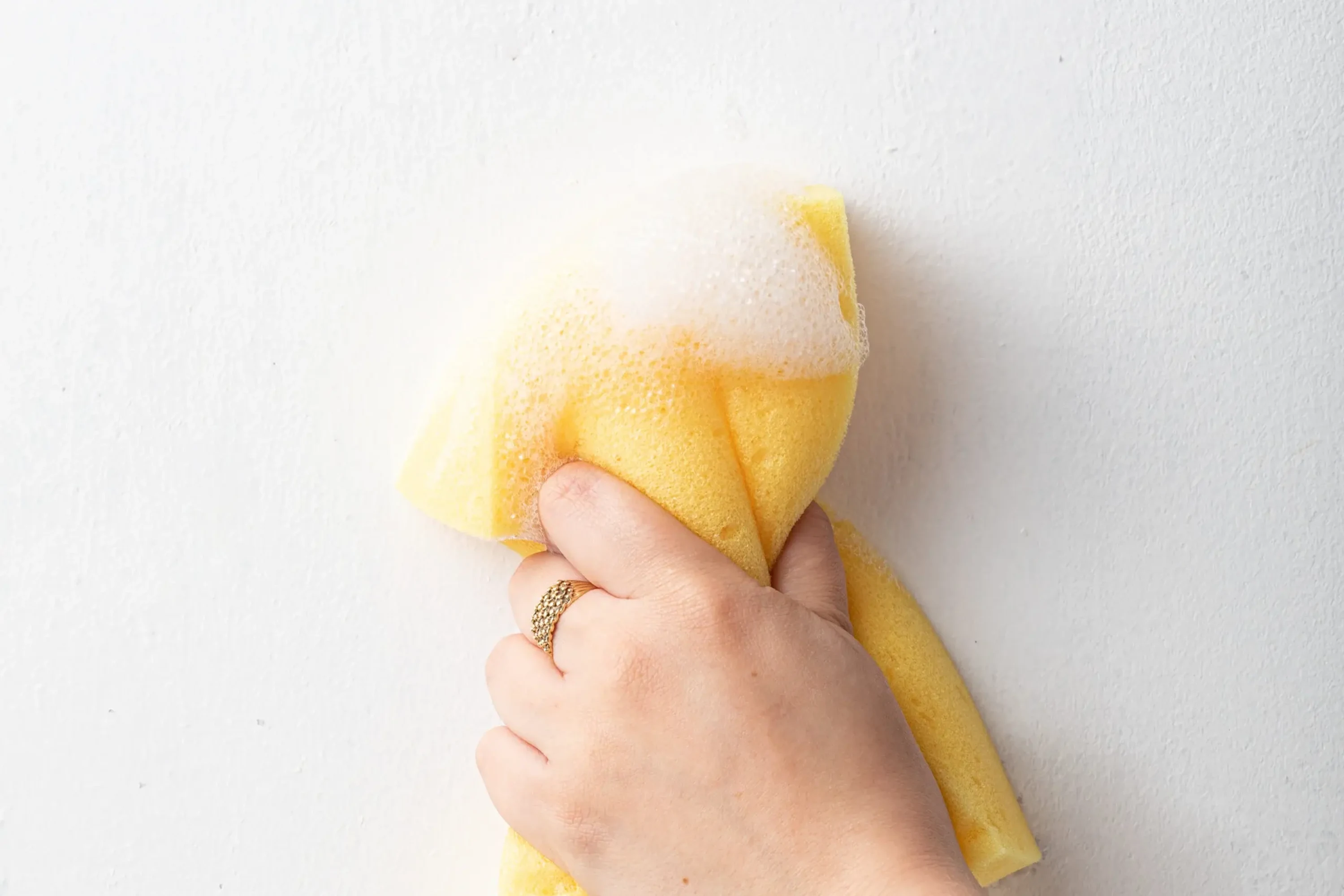
3. Apply the solution to the walls
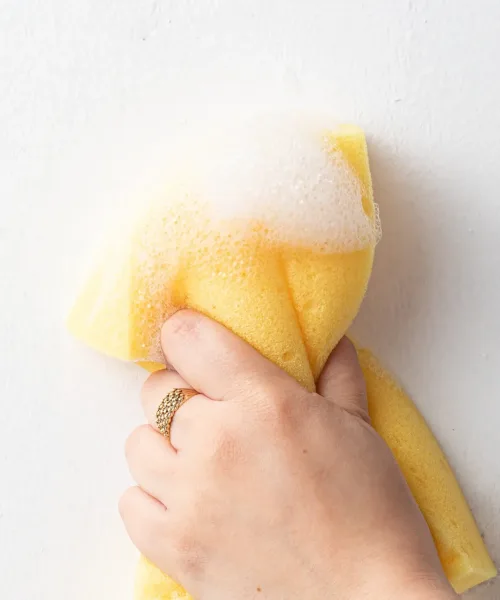
Dip the sponge into your wallpaper paste solution, and let’s start getting rid of that glue. The goal at this stage is to thoroughly moisten the glue, not to scrub it off (yet!) Work in smaller sections so you know that the glue is soft enough to remove, instead of working in large sections and missing your window. We’d recommend working in areas of around 5ft x 5ft at a time.
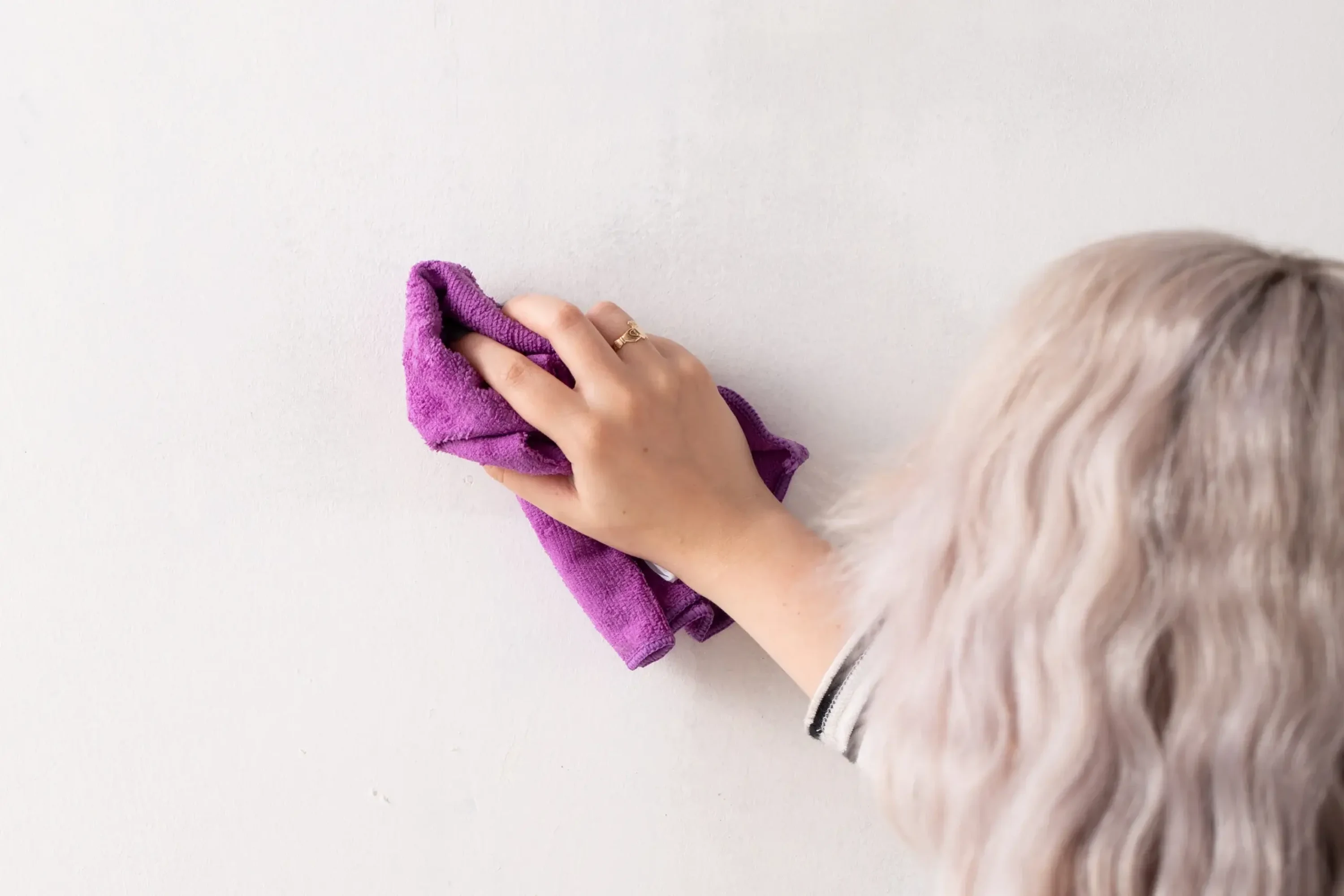
4. Scrub the wet wall
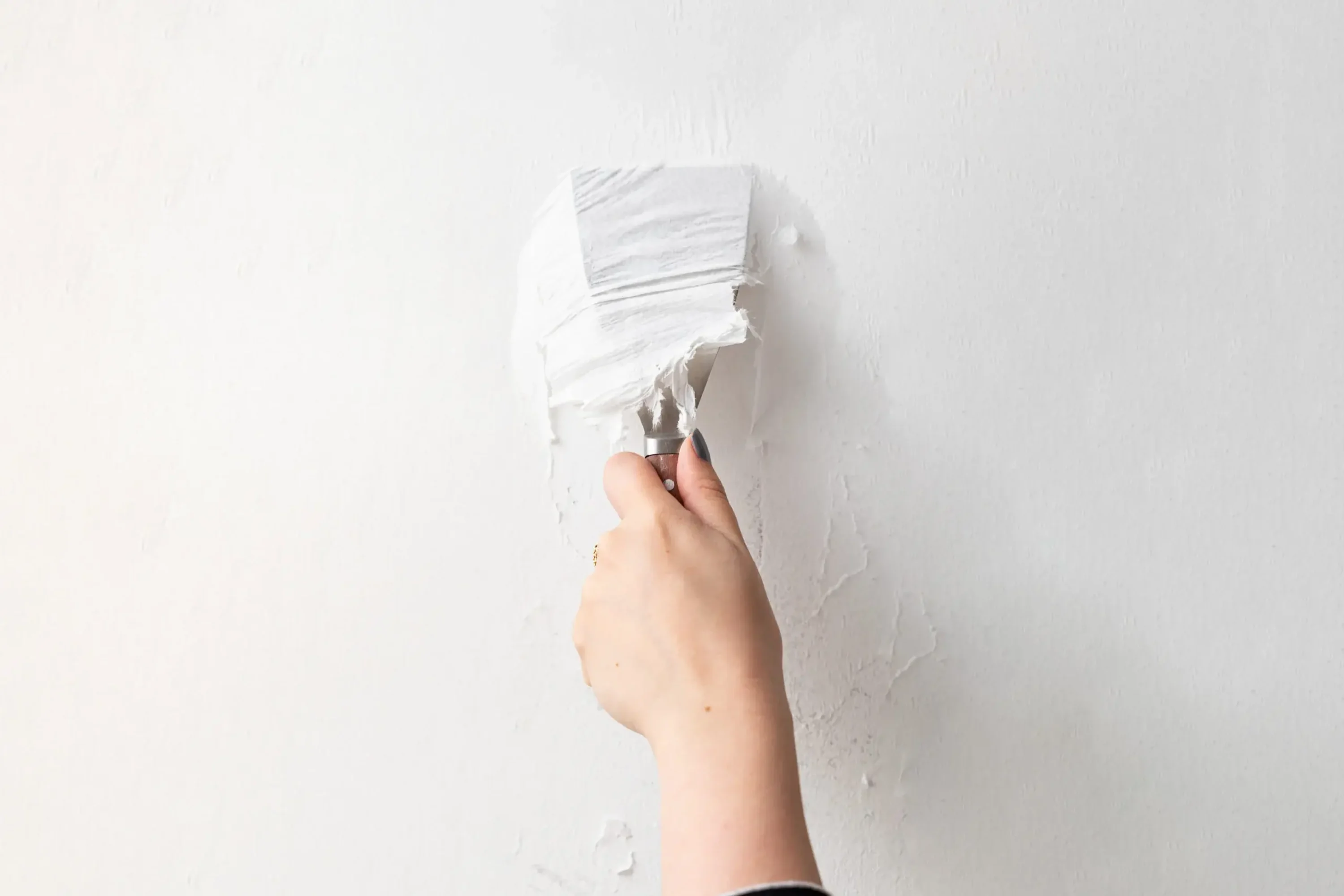
After you’ve left the solution to soak for about 2 to 3 minutes, dampen a microfibre cloth with the cleaning solution and wipe the wall down. By this point, the glue should have softened nicely, so you might be able to simply wipe it all away. For any stubborn pieces that won’t seem to shift, gently use your putty knife or paint scraper until all the glue has come off. Or, if this doesn’t work either, dip the damp microfibre cloth in some dry baking soda and gently rub the glue-covered area.
If any last bits really won’t budge, try using the wallpaper stripper. You want to make sure that all of the glue is removed from the wall, as any leftover residue will make your next wallpaper decorating project more difficult. Whether you’ll be applying new wallpaper or going for paint instead, you want the wall to be super smooth and clean.
Helpful tip: Work slowly with gentle pressure to prevent the putty knife or scraper from leaving any gouge marks in the walls.
5. Clean the walls
Spot-check and clean any sections that were taped off. Remove the tape from the electrical sockets and light switches, and use a sponge to make sure you’ve got into every nook. Once that’s done, it’s time to clean the walls. Wipe the cleaning solution off the walls in a circular motion with a clean, damp rag — make sure you don’t pick up the dirty one by mistake! For this, a little warm water should do the trick.
Dry the wall with a clean towel when you’re done. Allow the wall to air dry overnight or, ideally, for at least 12 – 24 hours. Run your hand along the wall and, if it’s smooth, then the glue has gone. But if it feels sticky or tacky, repeat the cleaning again.
Other wallpaper paste removal solutions
Cleaning leftover wallpaper adhesive requires some elbow grease and patience. Here are a few other removal techniques you can try if the above doesn’t work well for you.
Fabric softener
The best way to remove wallpaper glue is always up for debate. Some people swear by fabric conditioner, even if that’s just because it smells much better than the distilled vinegar method! For this method, you’ll need:
• Liquid fabric softener
• Warm water
• Sponge
• Spray bottle
• Cloths
• Putty knife
Combine equal parts warm water with fabric softener in a spray bottle and shake well to mix. Working in small sections, spray the liquid over the walls and let it sit for a few minutes. Make sure you wipe away the residue of the glue as you use your putty knife or paint scraper to remove the glue well.
Heat
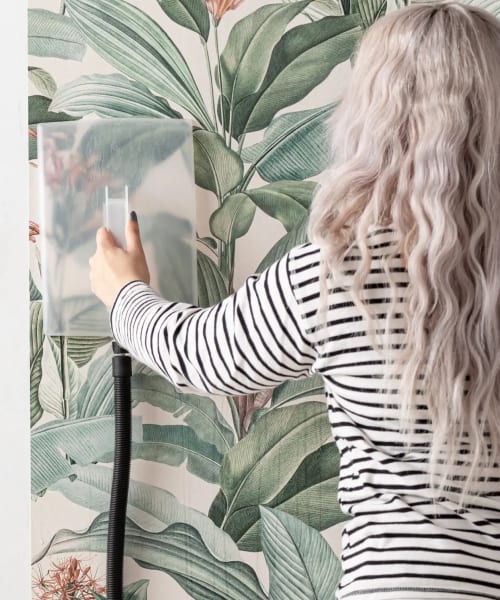
Heat can be one of the best tools for softening tough glue stains that are leftover from the wallpaper. There are two ways that you can use heat to remove the adhesive: with a heat gun or with a steamer. To remove the glue with a heat gun it’s best to follow the instructions on your model, but here are some tips from us, too. Hold the gun six inches away from the glue to warm and soften it, but make sure not to hold it in place for too long. Use the puffy knife or scraper to remove the adhesive from one section, then move on to the next. If you’d prefer to use a steamer, place the pad over the glue with one hand, and use the other to gently remove the adhesive. For more in-depth instructions, check out our how to remove wallpaper with a steamer guide.
Sander
For any areas that you can’t or shouldn’t put the mixture on, you can use a sander instead. Although we don’t recommend using this for the whole wall or room, it can be a quick and easy solution. Make sure you have the proper PPE (personal protective equipment) for sanding, as the spray from the dust can be harmful for your lungs.
Tips for scraping away wallpaper glue
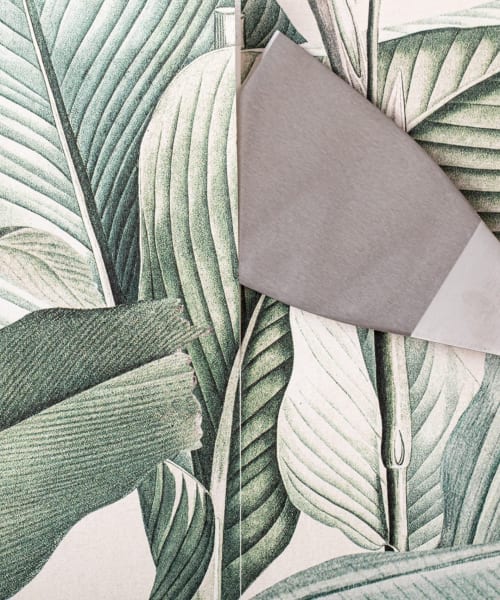
There’s a wide range of tools that you can use to scrape away the wallpaper adhesive, including puffy knives, paint scrapers, and scoring tools. But take care, because improper use of these tools can end up causing more damage than good. To properly use a scraping tool to remove glue, hold the knife or scraper at an angle and press the sharp edge between the wall and the adhesive. You’ll want to apply just enough pressure so that the bottom edge of the tool curves slightly. Next, gently wiggle the blade and slide it beneath the glue whilst pushing the tool forward. Be careful to avoid jamming the edge into the wall, because that could cause a gouge that’ll be difficult to fix.
FAQs
Can you paint over wallpaper glue?
Generally, we don’t recommend painting over wallpaper glue. Most interior paint is water-based and so is the wallpaper glue, and the two generally don’t react well together. You’d likely be left with a clumpy or wavy texture that will be very visible once the paint dries.
Does sugar soap remove wallpaper glue?
Depending on the wallpaper and paintwork you have, you may be able to use sugar soap. Despite the name, sugar soap doesn’t actually contain any sugar. Rather, it is a mix of sodium carbonate and water. Typically, sugar soap is usually used to brighten the walls and give them a good wash before painting.
What kind of primer should I use after removing wallpaper?
If all the glue has been removed and the surface looks and feels smooth to the touch, then you can apply a coat of latex primer.
Can you use acetone to remove wallpaper?
Yes, you can use acetone to remove wallpaper. It’s best to fill up a water bottle with the acetone and spray generously on the area. Make sure to keep the windows in the room open while you do this.
How do you know when all the wallpaper glue is off?
To find out if you’ve removed all of the wallpaper glue, spray some water on the walls and let it soak in. When you run your hand over the damp wall, it should feel smooth.
How do you remove wallpaper glue from painted walls?
To remove any of the glue residue from your painted walls, you’ll first need to strip the current paint and treat it using one of the methods in our ‘Prep and mix the cleaning solution’ section. Once you’ve done this, you can repaint the walls to give them a nice smooth finish.
How do you remove wallpaper dry from drywall?
Choose any of the cleaning solutions and methods above, as they will all work with most types of walls.
How to remove wallpaper glue: complete!
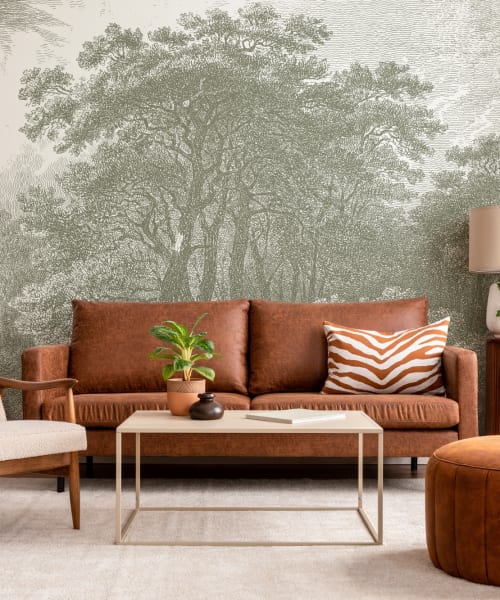
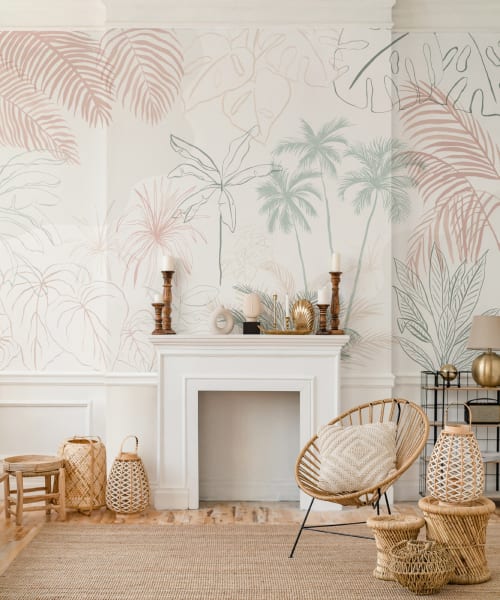
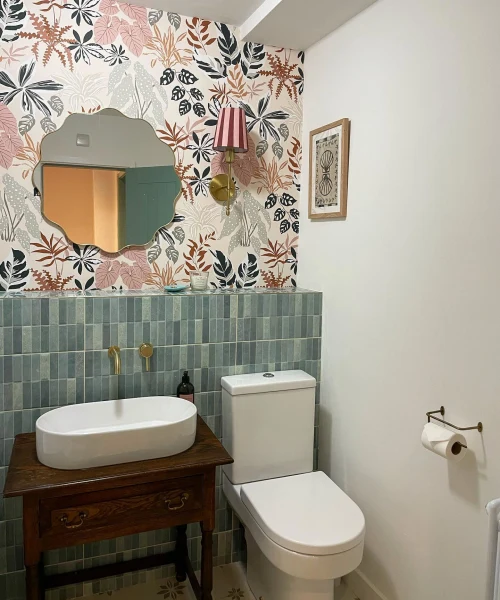
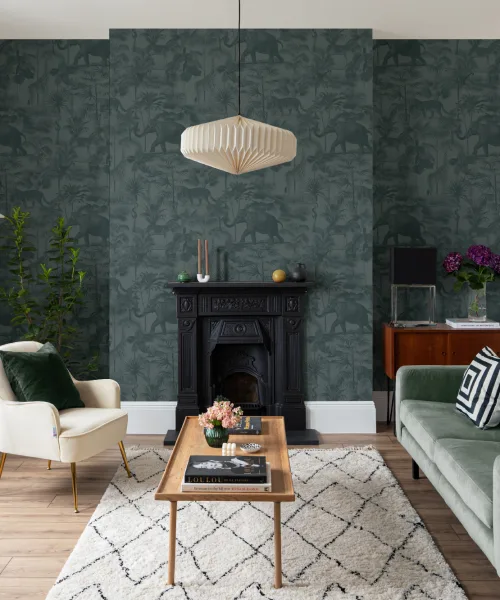
Now that you know how to safely remove wallpaper glue from your walls, it’s time to put your newfound knowledge to the test. Whether you’re following step-by-step or simply looking for the perfect cleaning solution, we’ve covered everything you’ll need to know in our ultimate guide. Want a modern wallpaper makeover for your newly blank walls? Our wide range of wallpaper will give your room a well-deserved upgrade. Or, if you’re looking for some more helpful suggestions, head over to our guides page to help you on your next wallpaper project.
Discover wallpaper designs


Unlock your exclusive discount!
Join our mailing list to access your exclusive discount code and be the first to know about our latest designs, limited collections and insider offers.
(P.S. We keep your info safe, check our privacy policy for details.)